Innovation is a key factor in keeping society growing and evolving, whether that means moving forward in technology, or getting back to the roots of mother nature. Construction is one of the leading industries in keeping innovation alive, and is increasingly pushing the boundaries of what’s possible. As the world constantly shifts, our team strives to move with it through climatic, population, and urban changes to build a more sustainable future.
Self-healing Concrete
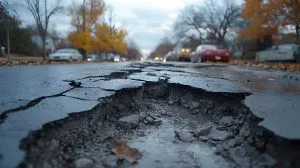
Concrete is one of the top construction materials in our day and age, known for its strength and durability. The major issue with concrete, generally, is that it tends to crack. According to Discrete Construction, cracking happens due to a variety of reasons, such as shrinking, thermal changes, stress, and environmental degradation. This can lead to serious leakage and corrosion of your building.
However, one of the most interesting innovative tools in the construction industry today is concrete that heals itself. This type of concrete has Bacillus bacteria mixed in, which can survive harsh, alkaline environments for up to 200 years. Activated by water, the bacteria produce a limestone that seals cracks in the concrete, essentially “healing” itself.
Self-healing concrete, although still a generally new technology, is one way to build a more sustainable future in the construction industry. Discrete Construction states that “the production of cement, a key ingredient in concrete, is responsible for around 8% of global carbon dioxide emissions. By extending the life of concrete structures and reducing the need for new cement, self-healing concrete can help lower these emissions and contribute to a greener planet.”
Transparent Aluminum
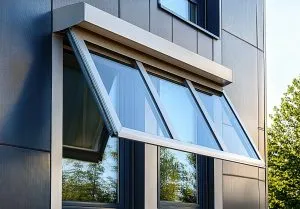
Aluminum Oxynitride (ALON), otherwise known as transparent aluminum, is a ceramic material with the properties of both aluminum and glass. Seemingly impossible, this innovative substance is changing the way we use metal in construction. It carries strength and durability while possessing transparency similar to glass, used for a multitude of purposes.
Transparent aluminum is processed through high temperatures and pressures. Powdered aluminum is put in an intense heat until molten. Then, nitrogen is mixed in, eventually transforming the molten aluminum into a clear crystalline substance, according to Discrete Construction.
ALON is extremely popular in military projects such as making armored windows and optical lenses due to its ability to resist powerful bullets. However, this material is exactly what engineers have been searching for. According to an article from Barbour Product Search, “It has been the ambition of engineers for a long time to find a material that combines the strength and durability of metal with the crystal-clear purity of glass. Such a “clear metal” could be used to construct towering glass-walled skyscrapers that require less internal support.”
3D Printed Structures
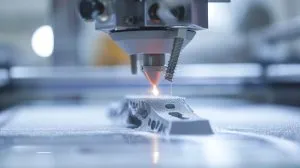
3D printing, the process of cross-layering material to form objects, is now being used in the construction world. Conexpo says that construction 3D printing starts in the typical way with the digital model, then virtually “sliced” into layers. A printing robot will then follow a preprogrammed path to form each layer made up of materials such as metal, concrete, or polymers.
Construction 3D printing has been used so far to build structures like houses and offices. “This technique allows for the construction of complex structures with precision and speed, and with less material waste,” explains Conexpo.
Carbon Fiber
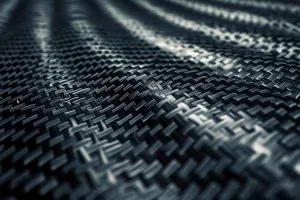
One of the most futuristic materials used in construction today is carbon fiber. Most frequently used in sports for things like tennis rackets, golf club design, and bikes for lighter cycling, the material is being used more and more in the construction world.
Carbon Fiber is known for its combination of strength and lightness, according to PlanRadar. This material is 75% lighter than iron and 30% lighter than aluminum. It’s used to improve strength in more traditional building materials like concrete blocks and wooden structures. Additionally, carbon fiber can be added to structures to reduce the thickness of panels and lower their weight, while simultaneously providing great thermal insulation. PlanRadar says the only downside of this material is its high cost.
Biomimetic Materials
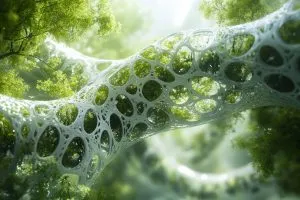
Just as life imitates art, sustainability imitates mother nature. Biomimetic materials are a great example of this concept in that they mimic natural properties found in biological systems to create new solutions for more sustainable construction. “By looking closely at the natural world, researchers and scientists have been able to create materials that mimic some of the most amazing traits found in biology, from the self-healing abilities of trees to the structural efficiency of honeycombs,” explains Discrete Construction.
One example is self-healing concrete, previously discussed in this article. Beyond that, researchers are studying the development of materials based on and inspired by the structure of bird bones. Stronger than their weight suggests, these bones are hollow and have a structure resembling a honeycomb. These traits make the perfect example for lightweight, strong construction material, hopefully reducing usage in buildings “without compromising structural integrity.”
To learn more about these materials and several more in the innovative construction world, talk to our experts. Visit our Contact page to start the conversation.
Notifications