What Is It?
Tilt-up construction, according to the Tilt-Up Concrete Association (TCA), is “a building system whereby large concrete elements (usually walls) are cast on-site and lifted into place with a crane.” The concept got its start in the early 1900s, when Robert H. Aiken used the onsite method to build Schindler House in West Hollywood. The trend grew when Thomas Edison said that he believed that tilt-up construction was the way of the future, building an entire village using the method in 1908 in Union, New Jersey.
By the 1970s-80s, the design was widely trusted by contractors throughout North America. Although the lifting system hasn’t changed a ton in the last 50 years, it initially went through a period of trial-and-error in terms of anchoring, engineering, and safety.
How It Works
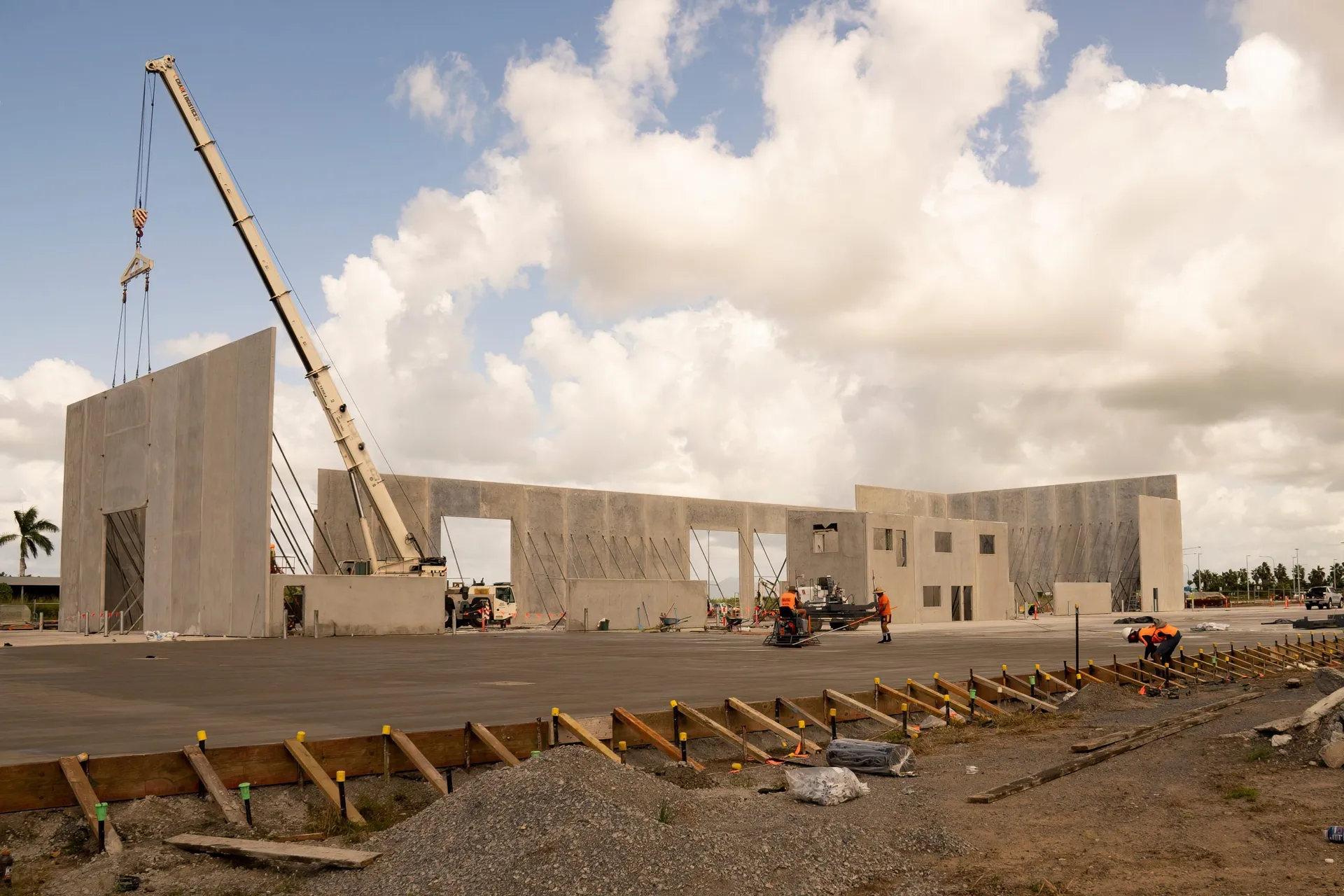
Tilt-up construction begins with the creation of wall panels on site using wood, rebar, or concrete. The panels are then shaped and cut to match the final design. This segment ends with concrete being poured into the forms, which are then left to settle.
When the walls have dried, they’re tilted to a vertical position and placed onto the foundation to form the building’s exterior. While the roof is being put together, the wall panels sit braced, waiting for the finishing touches to be applied.
Modern-Day Uses & Benefits
Tilt-up construction has primarily been used to build structures like warehouses and industrial buildings. However, modern American developers are drawing closer to the idea as they search for economically sound techniques for constructing Class A office buildings. Overall, office buildings that use tilt-up construction methods are about $12 cheaper in comparison to the more traditional, steel-framed builds.
The tilt-up method is also more time-efficient, getting the materials out of the elements: “A key rule on any job is to “be in the dry” as fast as you can, and Tilt-Up significantly quickens this process,” say tilt-up construction experts at Korte Company in Illinois and Missouri.
For more information on the tilt-up process or to discuss a project, visit our contact page to schedule a meeting with our experts today.
Notifications