READ MORE \| Sustainability in Commercial & Industrial Construction
As urban development is continuously integrated into society, architects have worked to ensure that mother nature is not left behind. They’ve come up with numerous solutions, such as recycled materials and furnishing, incorporating direct and indirect sunlight into designs, and more. One idea in particular has been the shining star of eco-friendly construction: biophilic design.
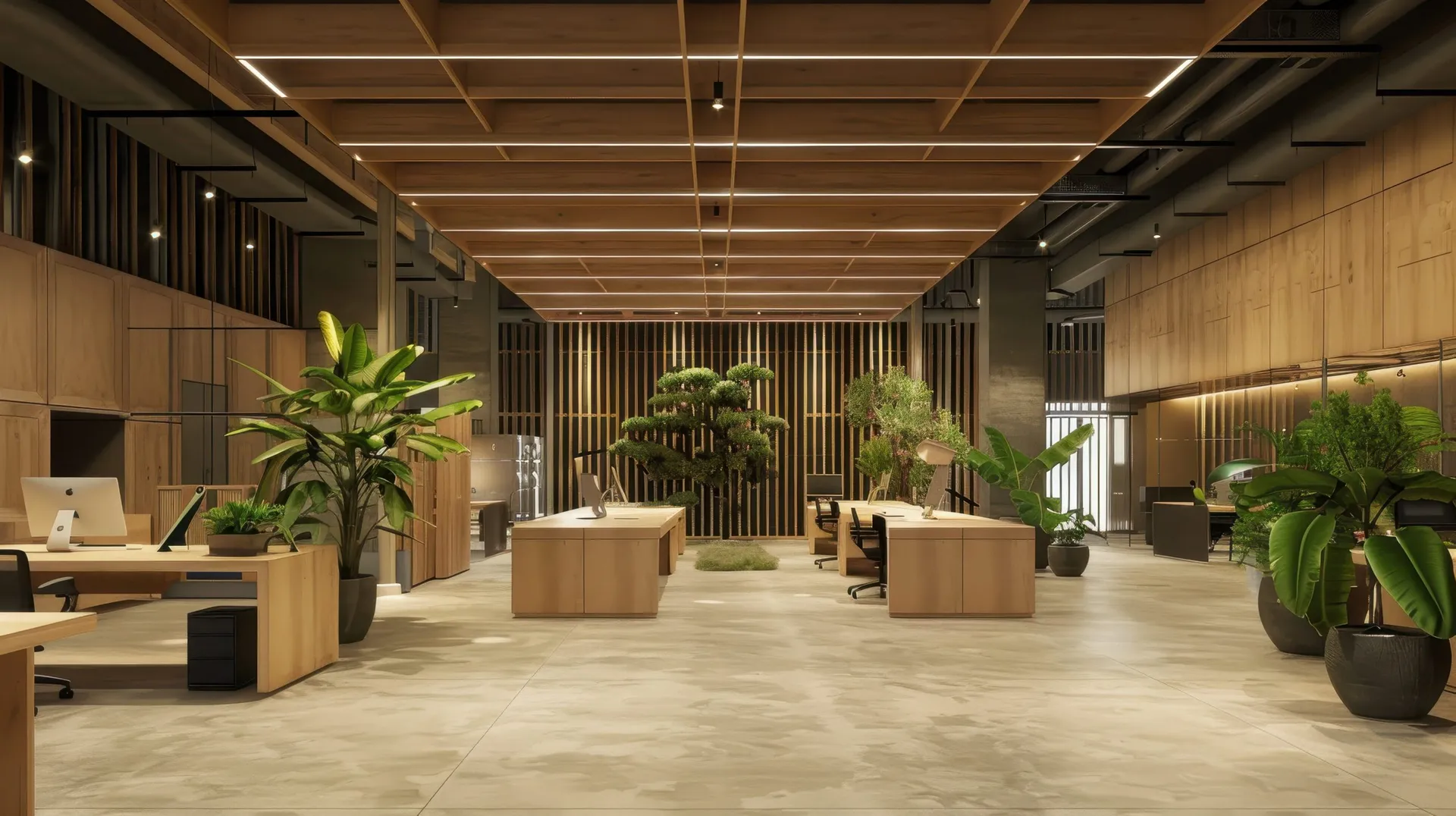
Biophilic design, according to Arch Daily, is defined as architecture that “promotes wellbeing by incorporating elements that establish a coherent relationship between nature, human biology, and the building physically, visually, and emotionally.” Constructing a biophilic work atmosphere can be done using natural materials, greenery, natural light, and natural ventilation.
Benefits
As well as being aesthetically pleasing and eco-friendly, biophilic design has an abundance of beneficial qualities for workers. Physically, the design style promotes:
- Improved fitness
- Lower blood pressure
- Fewer illness symptoms
Biophilic design also provides mental and behavioral benefits. Being closer to nature raises the benefit of motivation, productivity, creativity, and decreases stress and anxiety. Natural environments have also been known to improve coping skills, attention span, and social interactions.
Materials
One major method of biophilic design is the use of natural materials in the building process. Architects have been using the earth’s resources more and more as time goes on and the need for more sustainable building practices becomes apparent. Recent studies even proved that using sustainable materials creates positive cognitive and physiological outcomes for workers, too.
Because of the beneficial qualities these resources bring, “architects went back to extracting materials from the local terrain through minimal processing, reflecting the local geology to establish authenticity and a sense of place, as well as promoting sustainability architecture,” says Arch Daily.
Plantscaping
An even more common way to integrate nature into construction design is through the use of greenery, water, and fire elements, or “plantscaping”. For a biophilic design with a plantscaping technique, the plants must be chosen based on climate conditions, geography, and availability. Choosing things that match with the area’s qualities will ensure the design’s authenticity. Some ideas include:
- Water walls
- Aquariums
- Miniature ponds
- Fountains
- Streams
Natural Lighting
The need for natural lighting in a biophilic design has to do with the human circadian rhythm, or the 24-hour biological cycle. Arch Daily says that although most buildings nowadays include a mix of artificial and natural lighting, they have “not yet replaced the way the human body responds to natural light, nor how much it needs to function properly.”
Over-exposure to artificial light can impact the body’s natural clock, which ultimately impacts productivity, appetite, and energy levels. Prioritizing natural light in your design can preserve and attend to these human needs by encompassing light and shadow, restoring the circadian rhythm.
Visit our Contact page to start a conversation with a construction professional today.
Notifications